If you’ve been applying for jobs recently, you’ll know employers aren’t only interested in qualifications and years of experience. They also want to understand something harder to see on a CV: how you actually work. Can you make a good decision when something goes wrong? Explain an idea clearly? Work well with different people? Decide what matters when everything feels urgent? These are some of the skills employers look for when deciding who stands out.
This was brought into focus by a recent BBC News article published on 27 August 2026, which looked at the skills employers say candidates need to stand out. The article draws on a major five-year research programme from the National Foundation for Educational Research (NFER) and speaks directly to employers about what these skills look like in practice.
NFER’s Skills Imperative 2035 research identifies six “Essential Employment Skills” that are already important at work and are expected to become even more valuable as technology changes the jobs we do. They are communication, collaboration, creative thinking, information literacy, organising, planning and prioritising, and problem solving and decision making.
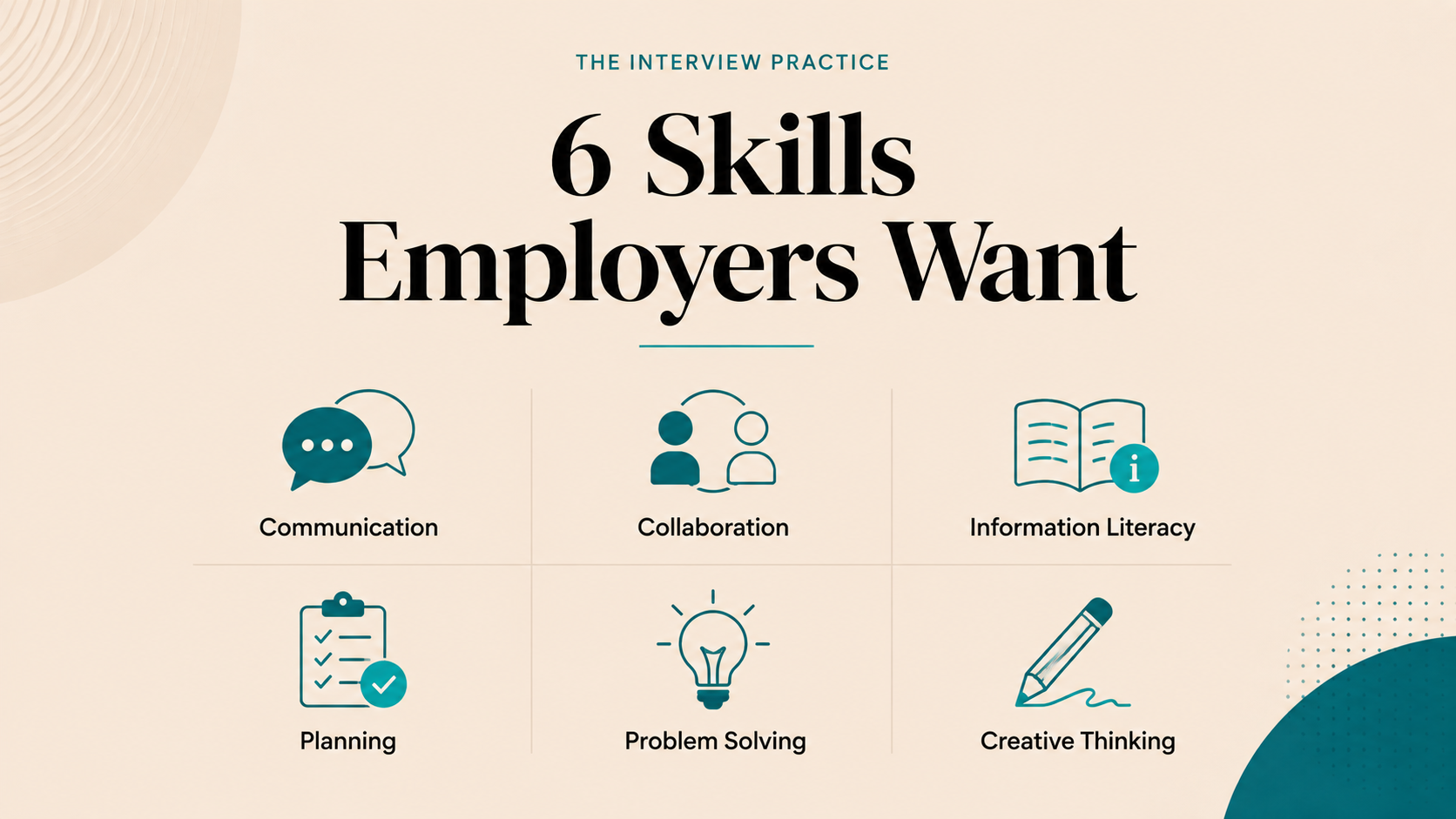
The important bit for job seekers? Having these skills is only half the battle. An employer needs to be able to see the evidence.
That means moving beyond phrases like “excellent communicator” or “strong problem solver” and showing what you actually did, how you approached it and what happened as a result.
1. Organisation, Planning and Prioritising
Being organised isn’t about having a perfectly colour-coded calendar. Employers want people who can work out what matters, manage competing demands and keep things moving when priorities change. Instead of writing “excellent organisational skills” on your CV, show what you managed: perhaps several projects, a busy workload, an event or competing study and work commitments. At interview, explain how you decided what came first. That decision tells the employer far more than simply saying you are organised.
2. Problem Solving and Decision Making
Things go wrong at work, which is why employers want to understand how you react when the obvious plan stops working. The BBC article includes examples of people developing this ability through experiences such as debating, showing that your evidence doesn’t always have to come from an identical previous job. When answering an interview question, don’t stop at “I solved the problem”. Explain what you noticed, what options you considered, what you decided to do and why. STAR can help structure the answer, but your judgement is what makes it interesting.
3. Communication
“Excellent communication skills” appears on thousands of CVs, but it tells an employer very little on its own. Communication is really about understanding your audience and adapting what you say, whether you’re explaining something complicated to a customer, presenting to senior colleagues or handling a difficult conversation. Instead of claiming the skill, show where you used it: “Presented monthly performance findings to senior stakeholders, turning detailed data into clear recommendations.” Remember that the interview itself is evidence too. Listening properly and answering the question clearly demonstrates communication better than saying you’re good at it.
4. Collaboration and Teamwork
Almost every job involves working with other people, but simply calling yourself a “team player” isn’t enough. Employers want to understand what you contributed when a group of people needed to achieve something together. Maybe you brought different teams together, kept people informed, resolved a disagreement or stepped in when something was falling behind. Be careful at interview that every teamwork example doesn’t become “we did this, then we did that”. Explain the team result, but make sure the interviewer can clearly see your part in it.
5. Creative Thinking
Creative thinking isn’t only relevant to traditionally creative jobs. In most workplaces, it means being resourceful: noticing that something isn’t working and finding a better way to do it. That might be improving a process, changing how information is presented, finding a workaround or adapting a plan when circumstances change. Instead of writing “creative thinker”, give the employer an example such as: “Noticed the same customer questions repeatedly reaching our inbox, so I created an FAQ that gave customers quicker answers and reduced avoidable enquiries.” That is creativity an employer can actually judge.
6. Information Literacy
This might be the least familiar phrase on the list, but it’s becoming increasingly important. Information literacy is your ability to find information, decide whether it is useful or reliable, understand what it means and use it to make a decision. That matters even more as AI makes it easier to generate and summarise huge amounts of information very quickly. You might demonstrate it by analysing customer feedback, researching options, comparing suppliers or reviewing performance data. The strongest example doesn’t just say what you analysed. It explains what you concluded and what you did next.
What Does This Mean for Your CV?
The easiest mistake is to add a section to your CV that simply says:
Communication. Teamwork. Organisation. Problem solving.
Anyone can type those words. Instead, look at your CV and ask:
How would an employer know this is true?
If you say you’re organised, show what you organised. If you’re analytical, show what you analysed. If you solved a problem, explain the decision you made. Wherever possible, include the scale, your individual contribution and what changed as a result.
That is the difference between claiming a skill and proving one.
And What About Interviews?
The same principle applies at interview.
Frameworks such as STAR are useful because they stop your answer becoming a rambling story. But structure is only the starting point. Candidates can now prepare polished answers more easily than ever, particularly with AI.
What an employer really wants to hear is the detail that belongs to you.
What did you notice? Why did you make that decision? What did you personally take responsibility for? What would you do differently now?
Those details reveal how you think.
You Probably Have More Evidence Than You Think
You don’t need an impressive job title to demonstrate these six skills.
A university project might prove collaboration and planning. A hospitality job might demonstrate communication, prioritising and problem solving. Volunteering could demonstrate initiative and teamwork. A challenging project at work might give you evidence of all six.
The important thing is recognising what your experience actually proves.
Before your next application, choose three of these six skills and find one strong example for each.
Then ask yourself: can an employer see that evidence on my CV, and could I explain it clearly at interview?
If not, that’s where to start.
Want to Make Your Evidence Stronger?
Knowing what employers value is useful. Knowing how to show them you have it is what can make the difference.
And if there’s something about your job search you’re stuck on, bring it to one of The Interview Practice’s free live Q&A sessions.
Free Live Candidate Q&A
Still have questions about your job search?
Bring them to us. Join our FREE Live Candidate Ask Me Anything session and get practical, recruiter-led advice on the challenge you're facing right now — whether that's your CV, applications, interviews or what to do next.
Join the FREE Live Q&A